
So you walked into a thrift store and locked eyes with a dusty dresser that looks like it’s lived three lives and possibly one breakup. It’s got “potential” written all over it—but right now, it’s giving more background extra than main character. Don’t worry. With a little creative energy (and maybe a podcast playlist to set the mood), you can turn that forgotten piece into the star of your living room narrative.
Step 1: See Past the Chaos (and the Dust)
When thrifting furniture, you need the same skill it takes to see your ex’s “potential” before it all went sideways: imagination. Forget the scratches, the chipped paint, the questionable knobs. What matters is the bones.
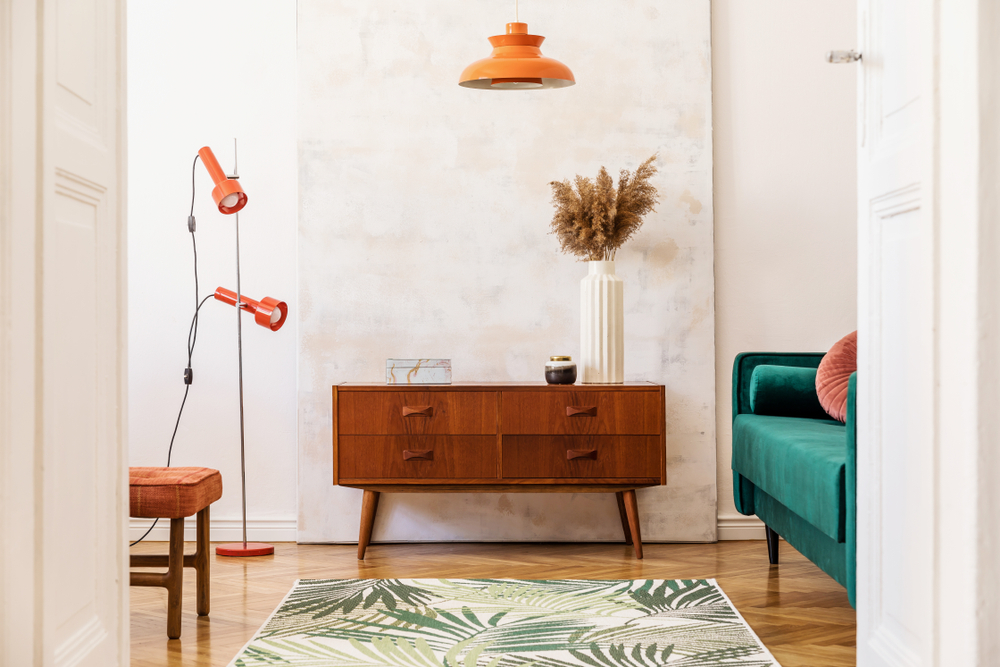
Things To Ask Yourself
- Is it solid wood or particleboard? (Hint: knock on it—if it sounds hollow, it’s not your soulmate.)
- Are the lines interesting? A curved leg or beveled edge can look luxe once repainted.
- Can you visualize it in a completely different color or finish?
If the answer’s yes, congrats—you’ve found your next leading role.
Step 2: Cast Your Color
Paint is your plot twist. The right hue can turn “grandma’s sideboard” into “art school grad with impeccable taste.”
Color Inspo
- Muted sage or dusty rose: Soft, romantic, perfect for that indie-film energy.
- Deep navy or emerald green: Feels expensive, even if you spent $35 and a Saturday afternoon sanding.
- Matte black: Dramatic, mysterious, and always the main character in a minimalist apartment.
- Two-tone or ombré: For those who want to whisper “Pinterest DIYer” without screaming it.
Bonus tip: If you’re repainting laminate, always prime first. Otherwise, you’ll have peeling paint faster than you can say “upcycling fail.”
Step 3: Hardware = Accessories
Swapping out knobs and handles is the furniture equivalent of adding gold hoops and a killer jacket. It’s small, affordable, and completely changes the vibe.
Thrift stores, Etsy, and even random vintage shops are goldmines for mismatched or one-of-a-kind hardware.
- Brushed gold for a polished, modern edge.
- Matte black for something bold and graphic.
- Ceramic or glass pulls if you’re leaning whimsical and eclectic.
Step 4: Texture Is the Secret Weapon
Want to make your thrift find look like it belongs in a design magazine? Layer it up. A new coat of paint is good, but adding texture makes it cinematic.
- Cane webbing on cabinet doors.
- Peel-and-stick wallpaper inside drawers or back panels.
- Rattan, linen, or burlap accents for a soft, lived-in vibe.
- Reupholstery for chairs or benches—bonus points for bold fabrics or funky patterns.
Even lining a drawer with patterned contact paper can make it feel a little more “curated character” and a little less “college furniture.”
Step 5: Placement Is Everything
Main character energy isn’t just about the glow-up—it’s about the spotlight. Once your piece is revived, give it the stage it deserves.
Idea Inspo
- Contrast: A bright piece pops against a neutral wall.
- Lighting: Position it near natural light or under a warm lamp.
- Props: Style it with plants, books, or framed art that tells a story.
It’s not just furniture now—it’s a personality anchor.
Step 6: Name Your Era
Every great protagonist has a signature era. Give your piece a “moment.” Maybe it’s your Coastal Grandma console table, your Eclectic Parisian vanity, or your Dark Academia bookshelf. Naming the vibe helps tie it into the rest of your space and gives you an excuse to post a full transformation video with dramatic music.
Step 7: Don’t Aim for Perfection
A few dings or imperfections? That’s character development. Thrifted pieces aren’t meant to look sterile or mass-produced—they’re supposed to feel like they’ve been places, seen things, and survived questionable interior design trends.
Your furniture doesn’t need to be flawless to be fabulous—it just needs to feel intentional.
The Final Scene
Thrifting furniture is part DIY project, part treasure hunt, and part self-expression therapy. It’s about seeing beauty where others see a junk pile and giving something old a second shot at stardom. With a little paint, some creativity, and your own sense of style, you can turn a $20 dresser into a statement piece that carries main character energy all day long.
And when your friends ask where you got it? Just smile and say, “Oh, it’s vintage.”